1/13-1/19
Hi folks, this past week was all about adjusting to Mérida and the classes at the Universidad Autónoma de Yucatán (UADY). The city and the people have been very welcoming, and I have learned to get around the areas I will be spending a lot of my time in while in Mérida.
Because I am a Chicana and am a fluent Spanish speaker I have not felt a strong sense of culture shock. Many of the conversations and foods are similar to what I am used to being surrounded by when at home. Nonetheless, I have found it a bit difficult adjusting to the very strong religious values some folks live by. Personally, I do not agree with Catholicism standards and expectations and have found it difficult to relate and not feel uncomfortable when conversations about important topics are intertwined and compared to the catholic church expectations.
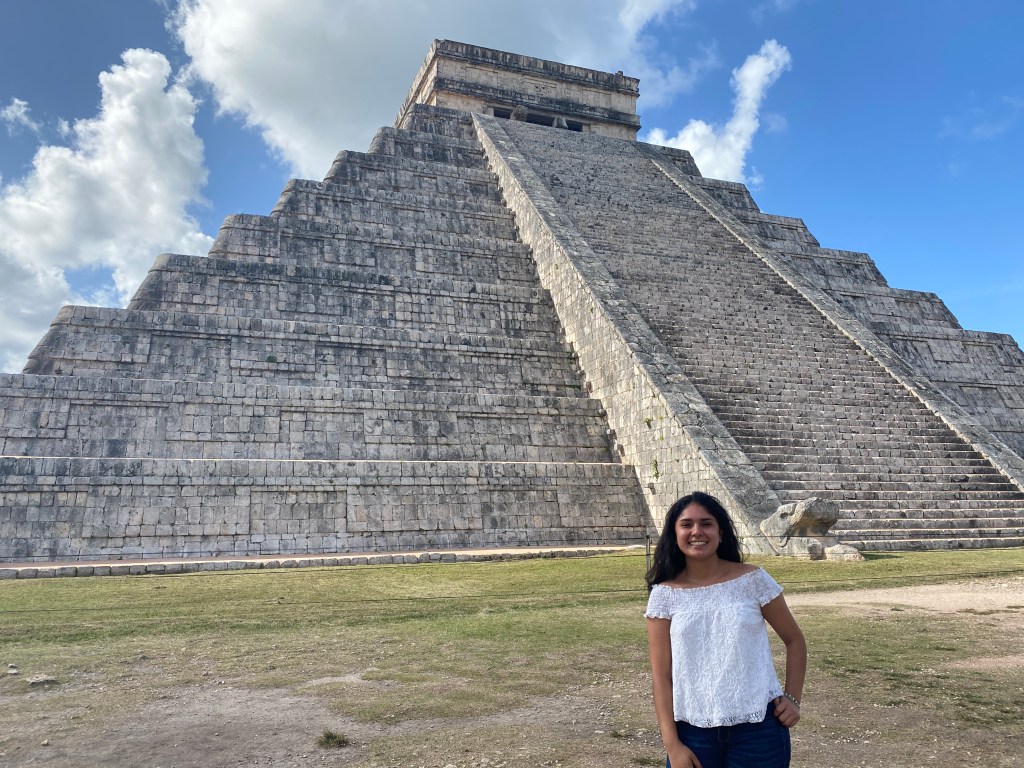
Aside from that, this weekend we had our first excursion where we visited Chichen itza a world wonder an hour away from Merida. We also visited the beautiful yellow city of Izamal and went swimming in the astonishing cenote Xlacah, Dziblichaltun.
When we entered Chichen Itza I was a bit overwhelmed by the amount of stands and shouting I was being hit with to purchase souvenirs. However, I recognized that the locals were the ones making a business of the world wonder which made me feel better. While at the cenote I enjoyed the natural beauty of the area and the cleanliness of the water. However, after finding out that cenotes are Lugares Sagrados (Sacred Places) I became very uncomfortable and saddened that I had not known this and willingly enjoyed my time in the cenote.
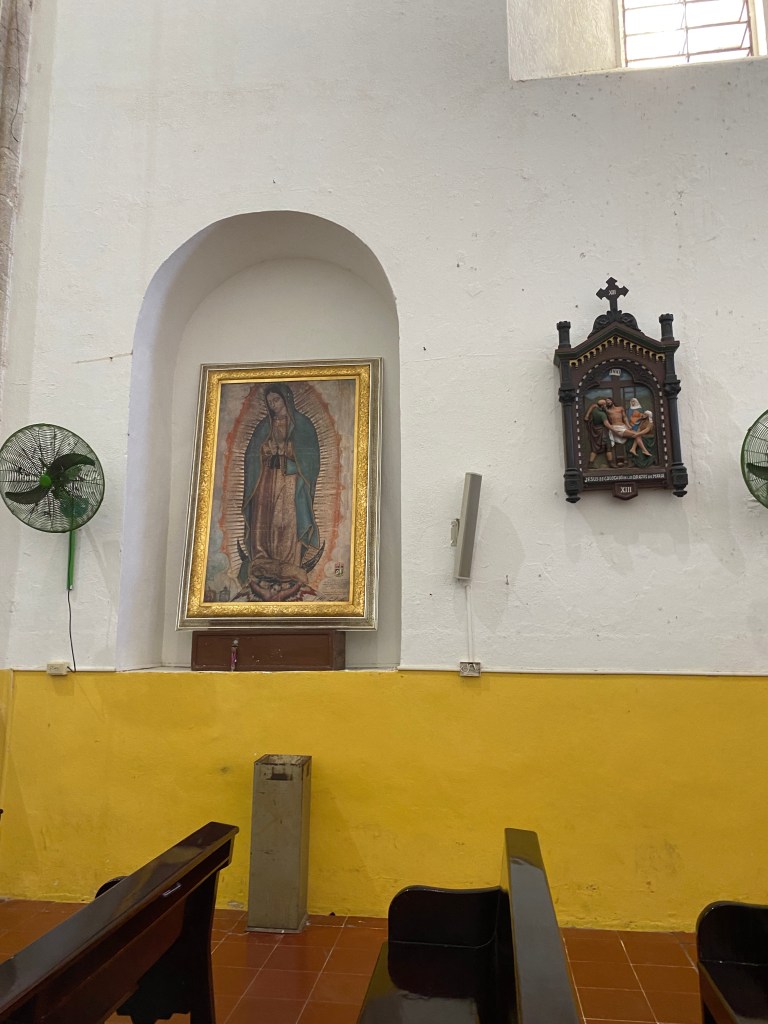
It was such a privilege to visit these locations and learn about their history and how they shape the local community today. There I witnessed the duality of religion within culture: these structures (the pyramid, the church) that appear so beautiful have been used as tools of imperialism and oppression. I would like to acknowledge the lives that were lost and persecuted in the process of creating and establishing these structures and both religious and cultural values.
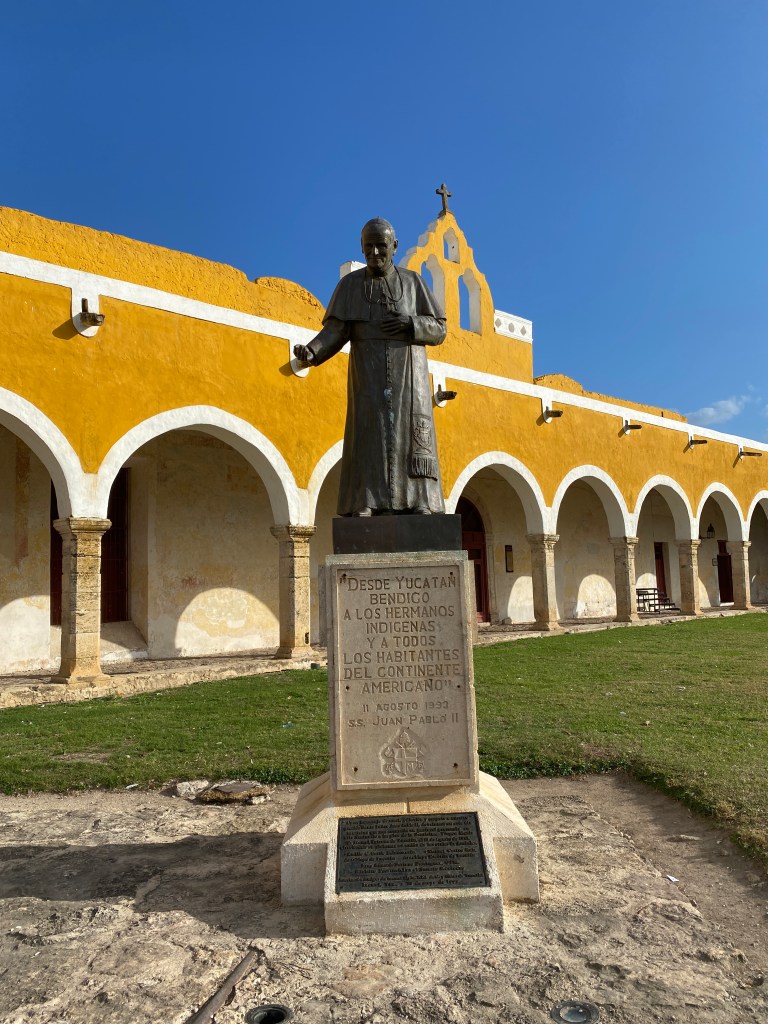
Most of Chichen itza was built by slaves while churches built in the XVI century were done so with the purpose of spreading the catholic churches ideals and the Spanish kingdoms expansionism. These power sources led to the massacre and attempted erasure of the local communities. Churches in the area for example the Monastery of St. Antony’s of Padua (in the picture) were built on top of Mayan sacred temples.
This excursion was a huge reminder of the importance that is to recognize history and my own privilege while taking space in different communities, cities, cultures etc. Also, the fact that the Yucatan Peninsula capitalizes of off its colonial image creates a weird dynamic were natives to the land have normalized it and with that, I believe, have accepted the erasure of their identity.
 Alejandra's Abroad Adventures