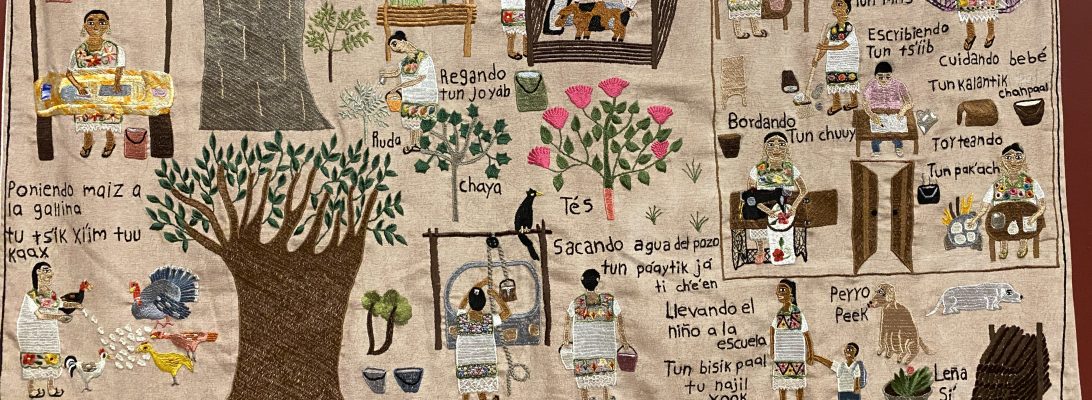
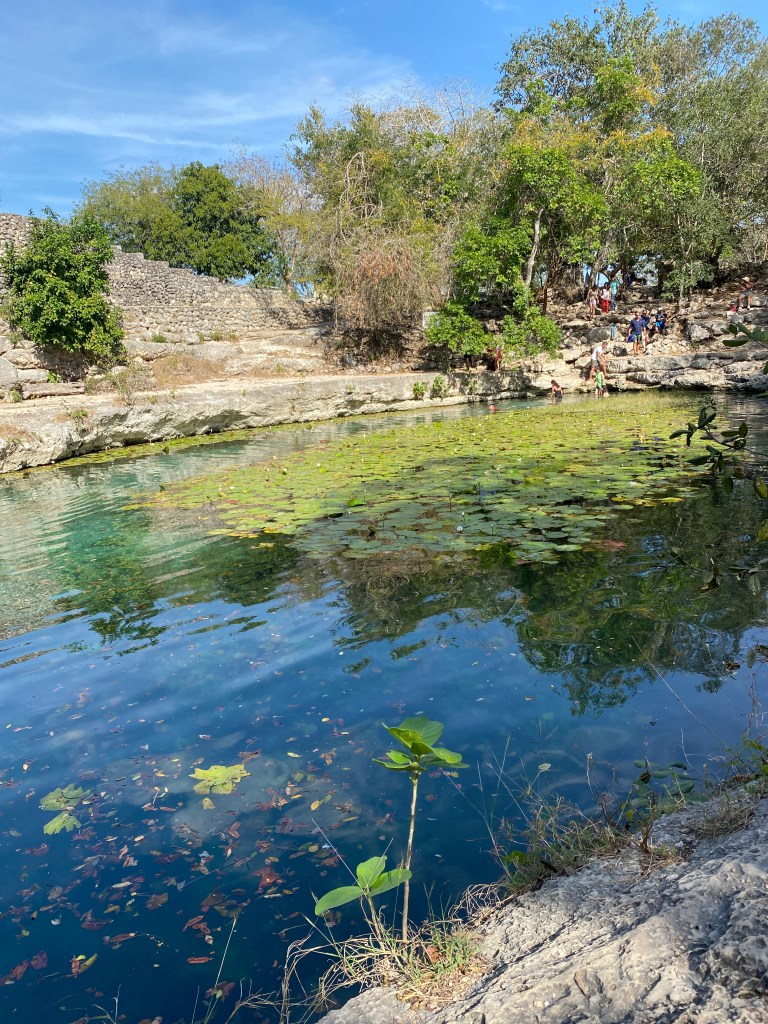
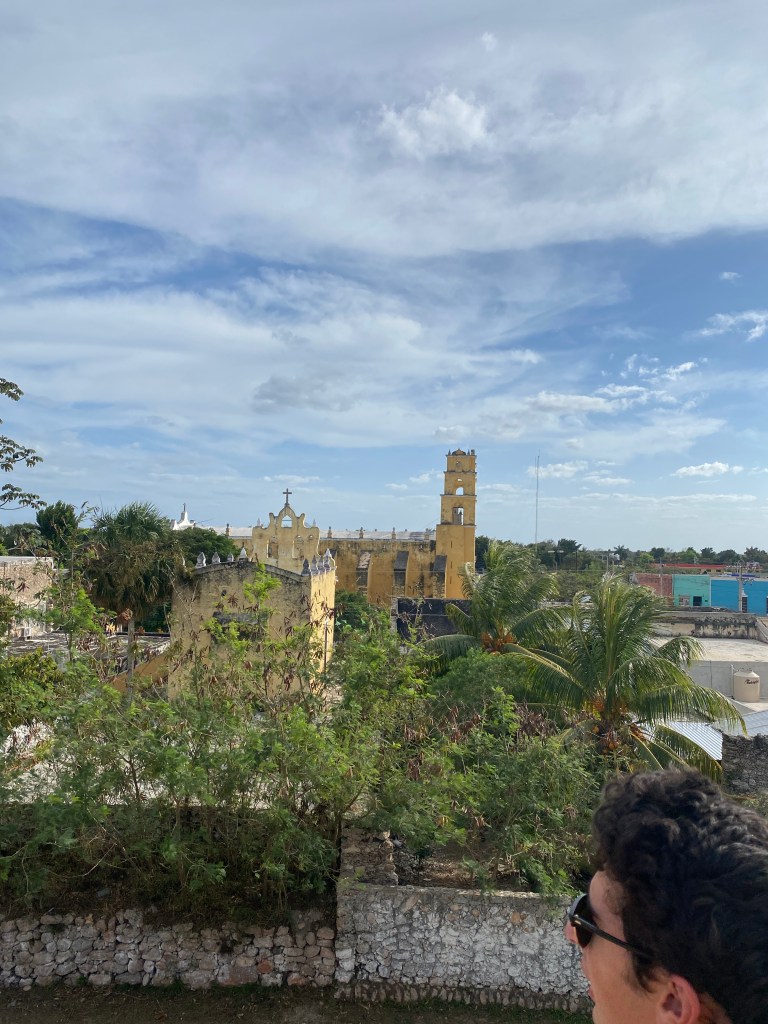
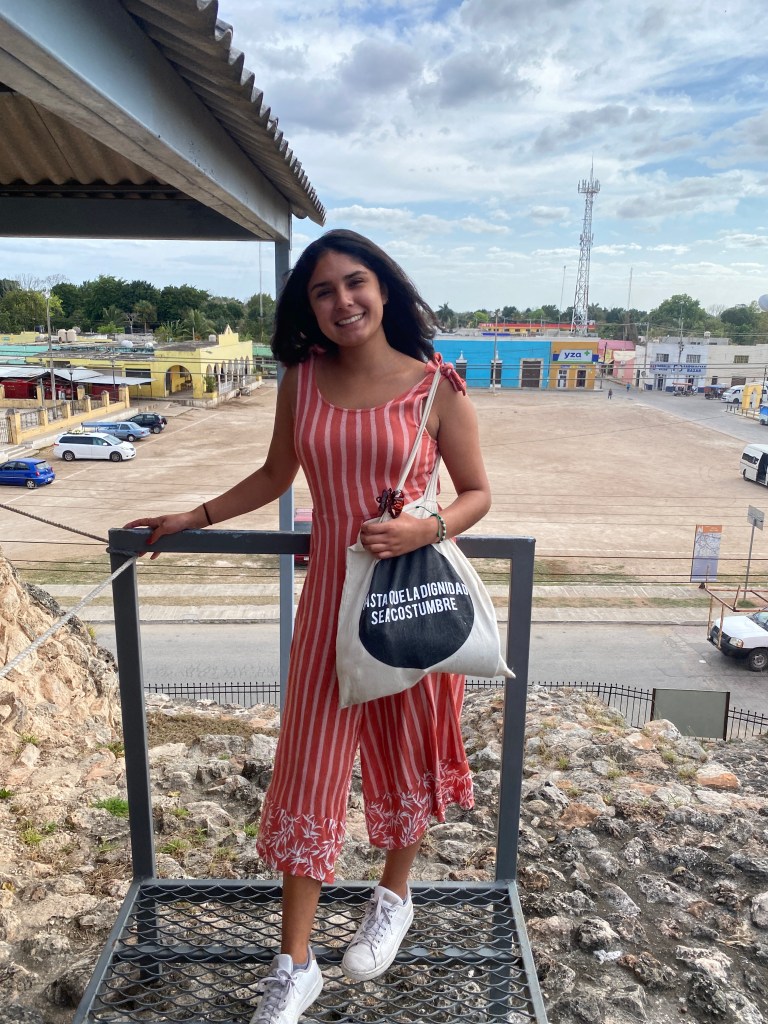
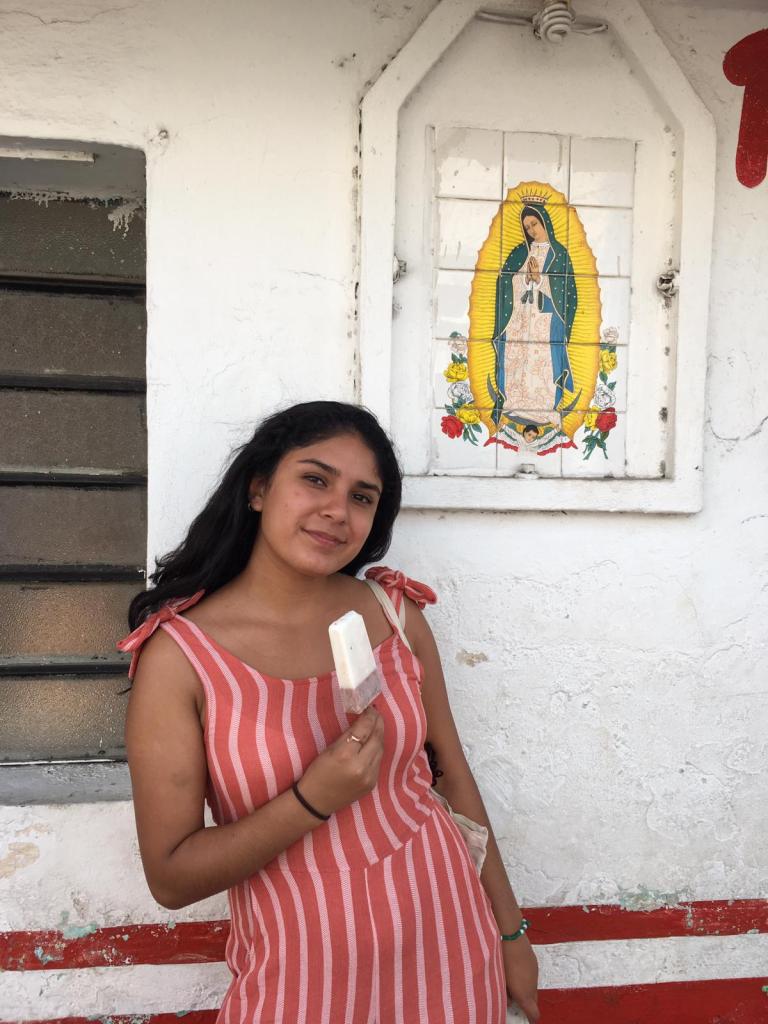
Later that week I also visited the town of Acanceh with a group of friends. We had a not so tasty meal and walked around to explore the town. We climbed two pyramids and spoke with an employee of the Instituto Nacional de Antropologia e Historia (INAH) who educated us on a bit of the town’s history. We learned that the cities name means Quejido de Venado this means that when the pueblo was founded there was a hurt deer in the center of the pueblo. Additionally, we learned of traditional events that take place in the pueblo such as the running of the bulls and la celebracion de Viernes Santo. He told us that the pyramid we were on has been falling apart since it was founded by a German archeologist. The region does not give enough money to support the care of the site. He also told us that the Church in the plaza was built with parts of the pyramid’s bricks and that during the Guerra de castas the church was a refuge for locals. We asked the INAH employee what folks do when they visit the town and he said: “Estamos abandonados aqui” which translates to “we are abandoned here”. He touched important issues that the town is facing economically such as keeping up with renovations needed. He seemed very down about the situation. Amidst the desolate conversation he continued to educate us on the surroundings he led us to a huge strong tree named Circote. The leaves from the tree were, according to him, used in the olden days to clean one’s hands. To end our visit, we got delicious freshly made paletas and took a combi (a small van) back to Merida.
In sum, this week was filled with a lot of exploring! Once again as a general observation I witness the disparities between towns due to how the region chooses to give and divide resources and funding for the upkeeping and caring of towns. I strongly believe that the tourist economy is at fault for this and that the region should be focusing on better ways of maintaining stable and happy communities before meeting outsiders’ demands.
 Alejandra's Abroad Adventures